

Port electrification: powering ports from grid to quay
European ports are moving from pilot shore-power schemes to large-scale electrification.Port electrification: powering ports from grid to quay
European ports are moving from pilot shore-power schemes to large-scale electrification.
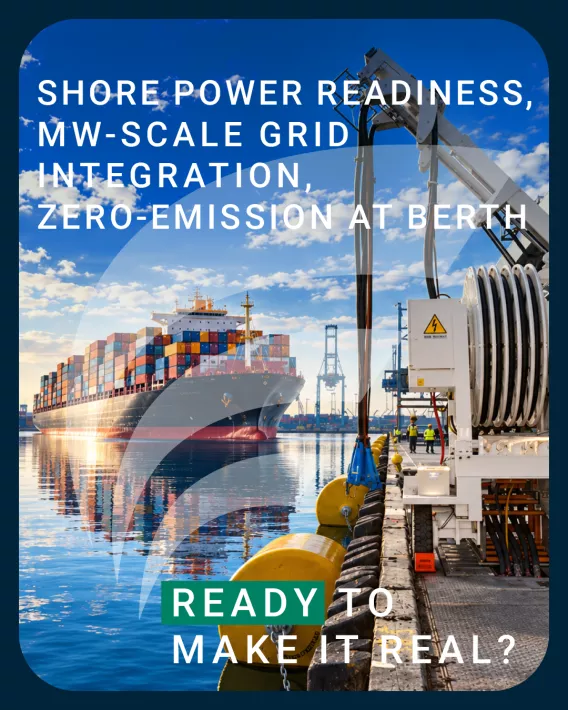
European ports are becoming energy platforms. Driven by new EU rules, they are electrifying fast, so ships can switch off their auxiliary engines at berth and stop releasing CO₂, NOx, SOx and fine particles into port cities.
And electrification does not stop at the quay. As cranes, handling equipment, logistics vehicles and trucks turn electric, demand rises well beyond what most port grids were designed to carry.
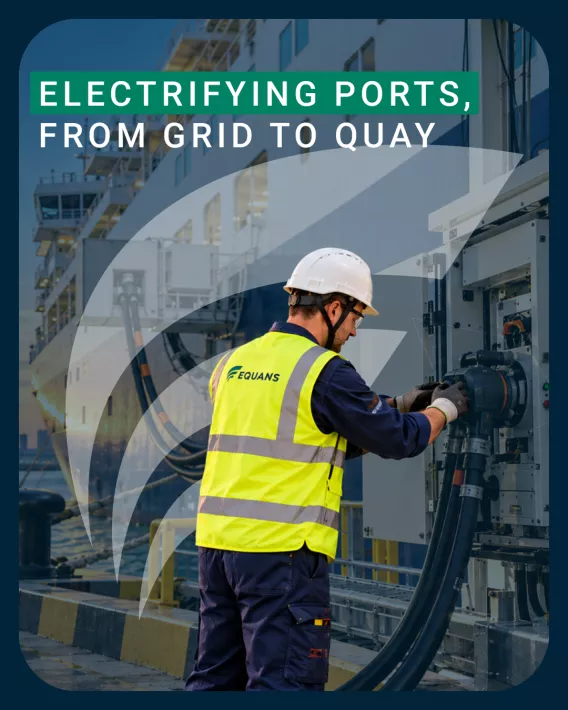
At Equans, our electrical infrastructure expertise support ports across the full electrification journey, from the grid to the quay and from the quay to the vessel, while keeping day-to-day operations running.
Key deadlines for your electrification roadmap
For most ports, the question is no longer whether to electrify, but how to keep up with mounting pressure, both from European regulation and from shipping lines and customers.
- EU ETS has covered maritime transport since 2024, putting a price on shipping emissions.
- FuelEU Maritime came into force in 2025. From 2030, it requires certain container and passenger ships to use onshore power supply or a zero-emission technology at the main European ports.
- AFIR requires onshore power supply to be available at designated TEN-T ports by the end of 2029.
Deployment across Europe is still uneven. The question has shifted: it is no longer whether electrification works, but how fast ports can roll it out at scale.
Electrifying every type of port
Not every port starts from the same place, and European rules do not apply to them in the same way. Power needs, priorities and deadlines differ from one type to the next.
The challenges of electrifying a port
Every port starts from a different place, but the same four challenges come up on almost every project.
- Decarbonising and meeting new requirementsCutting emissions from ships at berth and from port operations, electrifying equipment, and staying ahead of tightening environmental and regulatory targets.
- Meeting rising and variable power needsSecuring a grid connection able to handle demand that is both higher and less predictable, often by pairing the grid with local generation, storage and energy management.
- Financing the transitionPhasing investments to match the market, finding funding and grants, sharing infrastructure between users, and keeping total cost under control across the asset's life.
- Transforming while the port keeps runningRolling out new installations without taking the port offline, fitting them into existing infrastructure and stakeholders, and reconciling port operations with the surrounding city and its residents.
Beyond shore power: powering the whole port
We cover the whole electrical chain of a port, from the connection to the grid through to the vessel and every electrified use in between.
Connecting and distributing electricity
- Reinforcement of the port's electrical network
- High and medium-voltage substations, transformers and switchboards
- MV/LV distribution to quays and equipment
- Voltage and frequency conversion
- Electrical protection and continuity of supply
Supplying shore power to vessels
- Onshore Power Supply (OPS) for seagoing and inland waterway vessels
- 50/60 Hz frequency conversion
- Connection points, plugs and cable management systems
- Online management system for metering, monitoring and invoicing consumption
- 24/7 helpdesk for vessel operators
- Testing and commissioning
Electrifying port operations
- CCS and MCS charging for heavy-duty vehicles
- Charging for port and service fleets
- Power supply for electric cargo-handling equipment
- Electrification of terminal tractors, cranes and logistics equipment
- Charging infrastructure for depots and logistics areas
Managing and securing the power supply
- Supervision of electrical infrastructure
- Smart charging and load management
- Power allocation between the port's different uses
- Peak-load management
- Battery storage to limit peak demand
- Solar generation dedicated to the port's needs
- Operation and maintenance of electrical installations
Port electrification in action
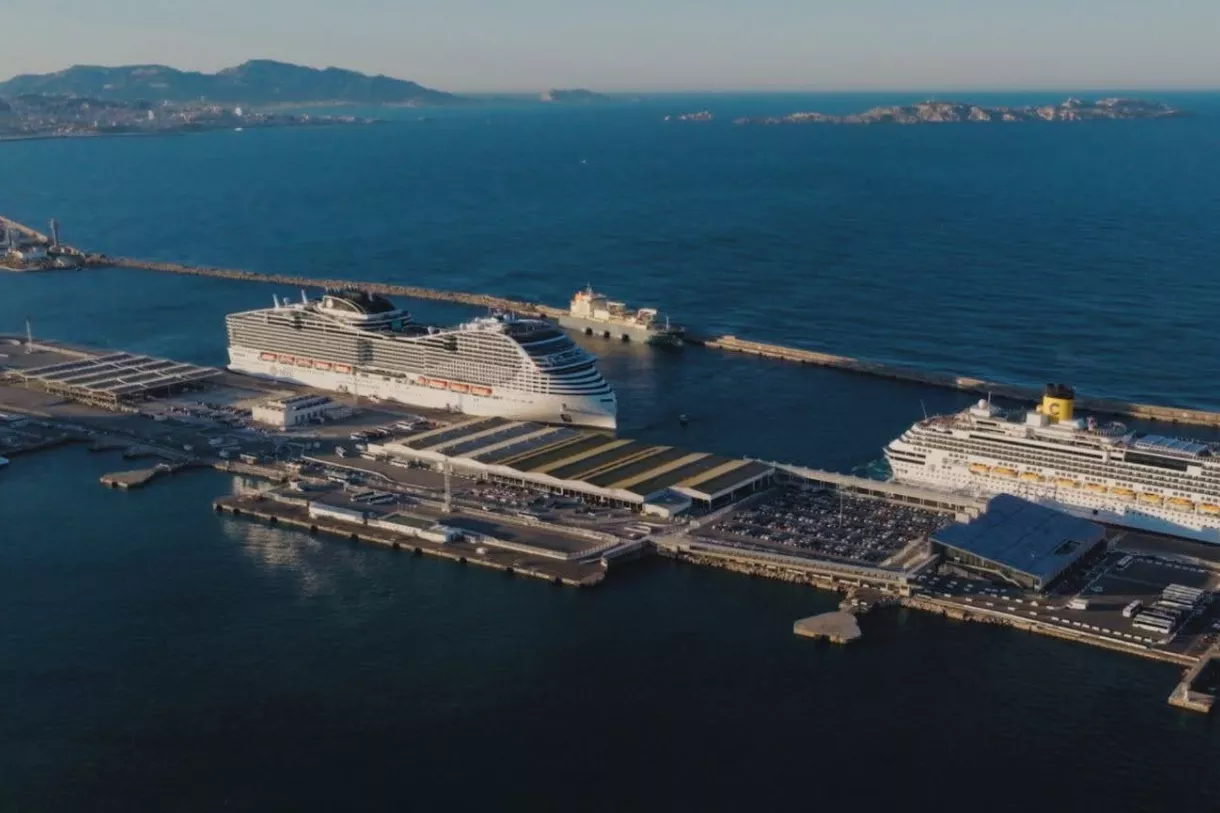
SHORE POWER FOR CRUISE SHIPS (CENAQ)
Marseille-Fos, France
At the Grand Port Maritime de Marseille, Equans built the CENAQ frequency-conversion substation so cruise ships can switch off their engines at berth.
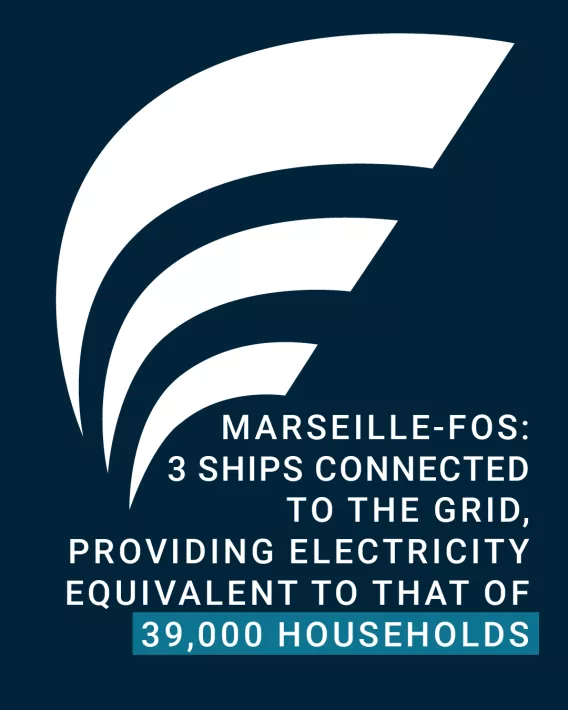
- 3 cruise ships connected simultaneously, at up to 16 MVA each
- Power equivalent to the consumption of around 39,000 households
- 6 km of high-voltage cable, with the port grid kept in operation throughout
- In service from February 2026
HIGH-POWER SHORE POWER
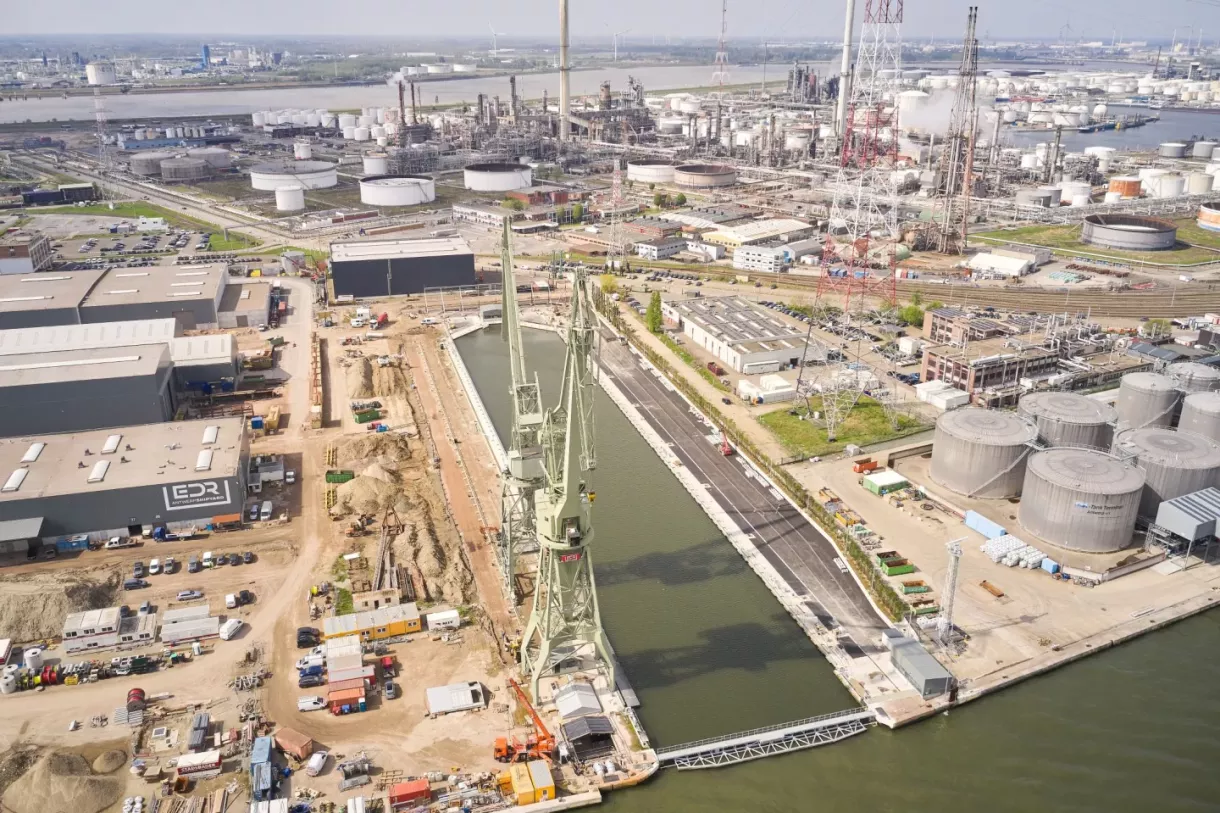
Port of Antwerp-Bruges (Zeebrugge), Belgium
As prime contractor, Equans is delivering and operating a shore-power installation at Zeebrugge, from grid connection to the quay.
- 4 shore-power cabinets and a cable management system
- 36 kV connection, 16 MVA transformer, 50/60 Hz conversion
- Delivered and operated by Equans (design, build, maintain, operate), 2024 to 2027
- Lower emissions and noise from vessels at berth
RENOVATING HIGH-VOLTAGE SUBSTATIONS WITHOUT STOPPING TRAFFIC
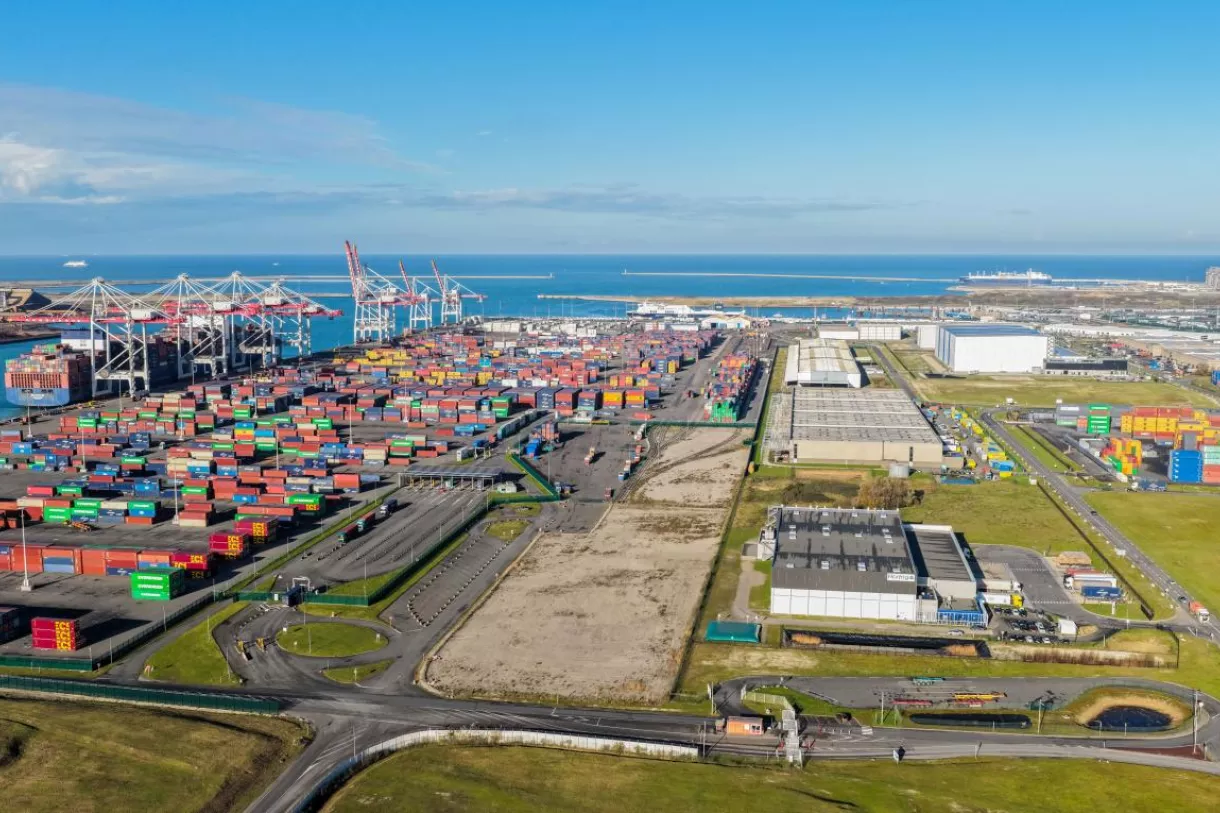
Port of Dunkirk, France
For the Grand Port Maritime de Dunkerque, Equans renovated three high-voltage substations on the west port, including asbestos removal, while keeping maritime traffic running.
- 3 high-voltage substations renovated
- Downtime reduced by at least one hour per outage
- Maritime traffic unaffected by the switchovers
What sets Equans apart
FAQ
It covers the whole electrical chain of a port: grid connection and distribution, onshore power supply to vessels, electrification of cranes, handling equipment and port vehicles, and the systems that manage and secure the power.
EU ETS has applied to maritime transport since 2024. FuelEU Maritime requires certain container and passenger ships to use onshore power or a zero-emission technology at the main European ports from 2030, and AFIR sets a shore-power availability deadline for designated TEN-T ports by the end of 2029.
Yes. Continuity of service is built into the design. At the Port of Dunkirk, for example, Equans renovated three high-voltage substations without stopping maritime traffic.
We cover the full lifecycle, from studies and design to installation, commissioning, operation and maintenance, so the infrastructure keeps performing once it is in service.
Maritime, river, commercial and mixed-use ports, both public and private. Our references span shore power for cruise ships at Marseille-Fos, high-power shore power at Zeebrugge (Port of Antwerp-Bruges), shore power for inland vessels at Ghent and Ostend, high-voltage substation renovation at Dunkirk, and the onshore docking stations of Zero Emission Services in the Netherlands.
Let's electrify your port
Whether you run a maritime, commercial or mixed-use port, public or private, electrification starts with your grid, your quays and the way your port operates every day. We bring together electrical engineering, shore power, port-equipment electrification and energy management to deliver the infrastructure and run it over time.Let's electrify your port
Whether you run a maritime, commercial or mixed-use port, public or private, electrification starts with your grid, your quays and the way your port operates every day. We bring together electrical engineering, shore power, port-equipment electrification and energy management to deliver the infrastructure and run it over time.