
Keeping defence assets mission-ready throughout their lifecycle
Keeping defence assets mission-ready throughout their lifecycle
Defence organisations have always maintained their equipment. What is changing is the role that maintenance now plays.
Most maintenance programmes were built for environments where access is predictable, schedules are flexible, and a failure, while costly, is recoverable. Defence environments operate under none of those assumptions.
Military assets remain in service for decades, evolve through successive upgrades and operate in increasingly connected environments. Maintenance is therefore no longer simply about repairing equipment, it has become an essential contributor to operational readiness.
Key takeaways
- Defence maintenance is increasingly judged by operational availability, not simply by the number of interventions completed.
- Predictive monitoring and remote supervision are helping teams identify issues earlier and plan interventions around operational constraints.
- Long-term readiness depends on continuity, coordination and accumulated knowledge as much as technical expertise.
- MCO brings maintenance, logistics, engineering expertise and long-term planning together around mission readiness.
- As operational technology becomes more connected, cybersecurity is becoming part of maintenance strategy.
Maintenance is no longer measured by repairs
For many years, maintenance performance was closely linked to the work carried out: inspections completed, faults repaired and components replaced. Those activities remain essential, but in defence they do not tell the whole story.
The more useful question is whether the platform or infrastructure is available when the mission requires it. A naval vessel may have limited opportunities to return to shore-based technical support. An airbase cannot simply pause operations because part of its electrical infrastructure needs attention. Command facilities depend on technical systems that need to remain available around the clock. Under these conditions, maintenance is not simply about restoring equipment quickly. It is about reducing avoidable downtime, anticipating requirements and sustaining availability throughout the operational life of an asset.
Modern defence infrastructure also brings together highly interconnected systems, from electrical distribution and HVAC to communications, fire protection, hydraulics and digital supervision. A fault in one area can affect others, making coordination between technical disciplines as important as specialist expertise.
Long service lives add another challenge, as platforms can combine legacy equipment with technologies introduced through successive modernisation programmes. Maintenance teams therefore need to understand not only individual systems, but their history, configuration and interaction with newer infrastructure.
DEFINITION: MCO
Maintien en Condition Opérationnelle is the French approach to sustaining defence assets throughout their lifecycle.
It combines preventive and corrective maintenance, logistics, spare parts management, technical expertise and long-term planning around one objective: maintaining operational availability. Increasingly, MCO also incorporates digital monitoring and condition-based maintenance to help teams anticipate issues before they affect operations.
Whereas traditional maintenance asks the question: ‘How quickly can we repair the asset?’, modern asset management (MCO) asks the question: ‘How do we keep the asset available throughout its operational life?’. This difference may seem minor, but it changes the way maintenance programmes are designed, assessed and managed.
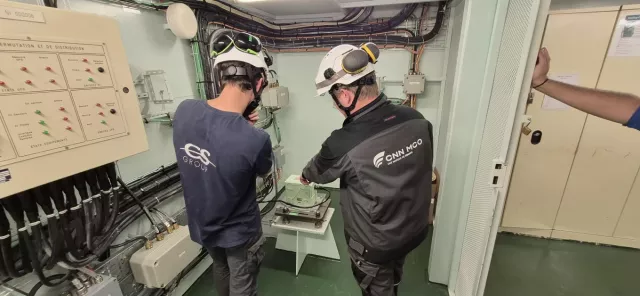
Eight-year MCO contract covering multi-technical maintenance and operational support for the French Navy’s amphibious helicopter carriers, including support during deployments worldwide.
-
24/7 expert support
-
Remote assistance / monitoring via Vigie On Board, si confirmé sur ce contrat
-
Multi-technical maintenance coverage
Defence maintenance follows different rules
Traditional preventive maintenance relies heavily on predetermined intervals: equipment is inspected or replaced because a certain amount of time has passed or a defined number of operating hours has been reached.
Condition monitoring adds another source of information: the actual behaviour of the equipment. Sensors can track parameters such as temperature, vibration and performance. When readings move away from established baselines, teams may be able to investigate before degradation develops into a fault.
For defence organisations, the value lies in planning. When maintenance windows are limited, identifying an issue before the next deployment can help teams prepare the right skills, parts and intervention at the right moment.
DEFINITION: Predictive maintenance
Predictive maintenance uses data from sensors and monitoring systems to identify signs of equipment degradation before a failure occurs. It enables teams to plan interventions according to the actual condition of an asset.
Remote supervision extends this visibility beyond the physical location of the equipment. On connected platforms, real-time information can support shore-based diagnosis and help specialists guide teams operating elsewhere. Other technologies, including digital twins, can further support maintenance planning by allowing teams to prepare complex interventions and review constraints before work starts on the physical asset.
These tools do not replace engineering judgement, they give experienced teams better information, earlier.
DID YOU KNOW?
Global military spending reached $2.718 trillion in 2024, according to SIPRI. As defence programmes grow in scale and technical complexity, sustaining platforms over time is becoming an increasingly important part of operational capability.
Cybersecurity is becoming part of operational availability
More connected systems create new possibilities for maintenance, but they also change the risk landscape.
Operational technology (OT) was historically separated from wider information networks. As remote diagnostics, connected sensors and digital supervision become more common, that separation is becoming harder to maintain.
The same connection that allows a team to monitor equipment remotely can also create an access point that needs to be secured. Diagnostic devices, software updates and remote support sessions all need to be considered as part of the platform’s cyber environment.
DEFINITION: OT vs. IT
Operational Technology (OT) refers to the hardware and software used to monitor and control physical systems, such as cooling equipment, electrical distribution or industrial control systems.
Information Technology (IT) refers to systems used for data processing and communications.
Modern defence infrastructure increasingly relies on the two working together: this OT/IT convergence improves visibility and control, but it also means cybersecurity needs to be considered as part of the maintenance architecture rather than as a separate activity.
This is also changing the skills involved in MCO: engineers, operators and cybersecurity specialists increasingly need to work together to protect both the physical asset and the digital systems used to maintain it.
Long-term readiness depends on continuity
Technology can improve maintenance, but long-term availability still depends heavily on people and organisational knowledge.
Teams working on the same platform over several years build a detailed understanding of its behaviour: recurring faults, previous modifications, operating constraints and the solutions that have worked before. That knowledge is difficult to reproduce quickly. Frequent changes in maintenance responsibility can therefore create a hidden cost. Technical documentation may transfer, but experience does not always transfer with it.
Long-term MCO partnerships can help preserve this operational memory while giving teams greater visibility over future interventions. They can also make it easier to coordinate multiple technical disciplines around the same availability objectives.
At Equans, we see continuity as a key component of operational readiness. Supporting critical defence infrastructure over the long term means combining engineering expertise with a deep understanding of each platform, close coordination between specialist teams and the ability to adapt maintenance strategies as operational requirements evolve.
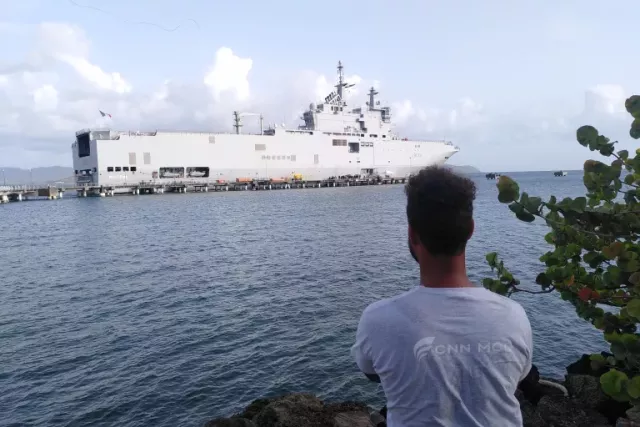
CNN MCO supports the operational availability of the French Navy’s PHA Mistral through maintenance, engineering and in-service support, drawing on multi-technical expertise and long-term knowledge of naval platforms.
-
Maintenance and engineering support
-
Multi-technical expertise across onboard systems
-
Spare parts and logistics support
-
Remote assistance capabilities, including Vigie On Board and 24/7 support
Availability is becoming part of the capability itself
Defence capability is often judged by the performance of a platform when it enters service. The harder question is how that performance will be sustained ten, twenty or thirty years later. Ageing infrastructure, connected systems and changing operational requirements are making maintenance more complex. At the same time, digital monitoring is giving teams new ways to anticipate issues and plan interventions earlier.
The result is a broader view of MCO, as maintenance is no longer simply what happens after equipment fails. It is part of how defence organisations protect availability and preserve capability over the long term.
The question is therefore no longer simply how quickly an asset can be repaired. It is what that asset needs to remain mission-ready throughout its operational life?
Go further
FAQ
Operational availability reflects the proportion of time an asset is genuinely ready to perform its intended role. Measures vary by programme, but the focus is increasingly on outcomes such as availability, downtime and continuity rather than simply counting maintenance interventions.
In many cases, yes. Older assets may require additional engineering to identify suitable measurement points and connect sensors to compatible monitoring systems. Feasibility depends on the platform, its architecture and its security requirements.
Longer contracts can help preserve technical knowledge, improve planning and give teams greater visibility over an asset’s lifecycle. They can also support more consistent coordination between maintenance, logistics and engineering activities.
Requirements depend on the platform and programme. They may include encrypted communications, restricted access, connection logging and specific network architectures. In sensitive environments, these controls are defined with the relevant defence authorities.
First-level interventions can be handled by teams on board or on site, with support from shore-based experts where secure communications allow it. Remote diagnosis and monitoring can also help teams anticipate what will be required at the next maintenance opportunity.